
Open Search Form
Start searching...
AWES

Skills for Success

Skills for Success are the nine foundational skills needed for success in work, learning, and life.

These skills are used every day to complete tasks at work, such as filling out forms, following safety instructions, or using digital technology to assist customers. They are also needed to navigate personal activities that support an individual’s well-being outside of work, like signing a lease agreement, managing personal health and finances, or paying bills online. 

This model is designed to respond to current and future labour market needs by reflecting the skills required to remain resilient in a dynamic labour market. It also includes intersecting skills that are in high demand like social skills and emotional intelligence. Skills for Success are transferable to all jobs, teachable through training, and measurable. 

AWES is a partner working on the development of the Skills for Success framework. Visit the Skills for Success website for more information.

The Skills for Success

  • Reading
  • Communication
  • Adaptability
  • Collaboration
  • Digital
  • Problem solving
  • Creativity and innovation
  • Writing
  • Numeracy

Reading

Definition:Finding, understanding and using information that is shared through words, symbols, or images in a physical copy or on a device.
The need for each skill:Reading skills are used daily and needed in every job to be able to work safely and efficiently. They are used to understand and interpret the meaning within text and to learn other skills. With strong reading skills, day-to-day activities like locating information online, following procedures in workplace manuals, understanding changes in travel advisories, and making sense of messages in articles, are easier and more manageable.
Examples:Searching for a piece of information, following written instructions, or browsing through written materials for entertainment. Reading skills are used for all kinds of materials both online and printed, such as forms, emails, recipes, reports, news articles and blogs, street signs, online posts, or safety instructions.

Communication

Definition:Speaking, listening, and interacting with others to receive, understand, consider, and share information and ideas.
The need for each skill:Communication is more than just sharing information or expressing ideas. Strong communication skills are needed in all jobs to actively join conversations, be a good team member and problem solver, follow instructions, and develop strong working relationships with co-workers and clients. These skills are used constantly at work and at home to listen, clearly share thoughts and opinions, gather and relay information while problem solving, and understand a variety of viewpoints. With strong communication skills, it’s easier to understand others, including those from different backgrounds and cultures, and be understood.
Examples:Listening to instructions, speaking in front of a group, serving customers, or discussing tasks with co-workers.

Adaptability

Definition:Using strategies, such as planning, staying focused, persisting, and overcoming setbacks to quickly adjust to new situations and achieve or modify goals and behaviours when unexpected or expected changes occur.
The need for each skill:Being able to adapt to new situations and keep working towards goals when challenges or barriers occur is necessary to becoming resilient and succeeding in dynamic workplaces. Having adaptability skills makes it easier to effectively deal with expected and unexpected changes in the workplace, at home, or in the community that affect how tasks or activities are completed. These skills help with remaining positive, staying focused on responsibilities and goals in difficult situations, and managing stress that can come with changes. Adaptability skills are also helpful for learning new skills and behaviours when needed.
Examples:Changing work plans to meet a new deadline, switching approaches to complete a task when one is not working, learning how to work with new tools or technology, or making adjustments based on feedback.

Collaboration

Definition:Supporting and listening to others, working in pairs or groups, and contributing to tasks to achieve a common goal.
The need for each skill:Workplaces are diverse spaces where collaboration with people from various backgrounds and cultures will be required to complete tasks and solve problems. Collaboration skills are needed to work respectfully with co-workers and clients with different professions, views, and experiences and to build and maintain positive relationships at work and in life. These skills make it easier to contribute to teamwork and be a strong team member, manage difficult interactions, and understand how to support, listen to and value others.
Examples:Helping a team member complete a project, brainstorming ideas in a group, or stepping in when a co-worker needs help with a task.

Digital

Definition:Using digital technology and tools to find, manage, apply, create, and share information and content safely and securely online.
The need for each skill:Most jobs use digital technology and a variety of online platforms for daily tasks. Digital skills are needed to find and share information, solve problems, communicate with others, and use the internet and online applications safely and securely. They are also needed to apply many other skills, such as reading, writing and numeracy. Strong digital skills make it easier to keep up with changes in technology and new demands in the workplace and in life.
Examples:Using the internet for research, using social media, making online purchases, creating spreadsheets, or using sales software to complete customer transactions. 

Problem solving

Definition:Gathering information and being able to use it to identify, analyze, and evaluate situations to address issues, propose solutions, and make rational decisions during tasks that require selecting a course of action.
The need for each skill:When problems arise, being able to assess a situation and use information to find the best solution and take action is critical. Problem solving skills are needed to identify issues, gather the right information, choose solutions to correct or overcome issues, and make decisions. This skill also supports activities that require thinking, such as evaluating options, reviewing different ways to complete tasks, choosing the best way to move forward in a complicated task, and deciding what to do first when several activities are competing for attention. Situations where problem solving skills are used can be monitored to learn from experiences, strengthen skills, and learn to adapt to changes quickly and effectively.
Examples:Settling disagreements or arguments, making hiring decisions, weighing the pros and cons of different options or approaches, balancing priorities to figure out which tasks to complete first, or troubleshooting technical issues.

Creativity and innovation

Definition:Imagining, encouraging, expressing, developing, and applying ideas in ways that are new, unexpected, or challenge existing methods and norms.
The need for each skill:Finding new, unique, or outside-the-box ideas and trying different ways of achieving goals comes from using creativity and innovation skills. Many employers are increasingly seeking people who can apply creativity and innovation skills to their work to discover new and better solutions or approaches for completing tasks and tackling challenges in diverse, dynamic, and constantly changing workplaces. Looking for inspiration from a broad range of experiences and perspectives helps develop strong creativity and innovation skills.
Examples:Discovering better ways of doing things, developing new products, or delivering services in a new or more efficient way.  

Writing

Definition:Sharing information and ideas using written words, symbols, and images in various formats either typed digitally or hand-written.
The need for each skill:Being able to adapt writing to a specific scenario and communicate ideas and information to others clearly and effectively is important. Different situations and platforms, such as digital or print, require writing styles that suit the specific context. Writing skills are needed to know what to write, how much to write, and which style to use for the specific purpose of the message and the intended reader.
Examples:Filling out forms and applications, sending emails, giving instructions, creating reports, and making social media posts.

Numeracy

Definition:Finding, understanding, using, and reporting mathematical information presented as words, numbers, symbols, or graphics. 
The need for each skill:Working with numbers and using math is an essential requirement of many jobs. Numeracy skills are important for understanding various forms of data, such as percentages, statistics, graphs, and information or discussions that use numbers. This skill is important for making decisions or purchases related to amounts and meeting expectations at work, such as reaching sales targets.
Examples:Making change, counting inventory, making calculations, managing budgets, analyzing or modelling data, calculating medication doses, and making estimations use numeracy skills. 

Skills and the workplace

Workers need the right skills to be successful at work. Skills for Success are the underlying skills workers need to complete every task, in any occupation. With a strong skills foundation, workers can efficiently and safely carry out assigned workplace activities, leading to better performance and higher quality of work. By having the necessary foundational skills, workers are better prepared to advance in their careers and are able to learn more advanced, technical, or industry-specific skills. Because Skills for Success are transferrable to all jobs, workers developing these skills also learn strategies to apply their skills to new tasks and different positions. This makes it possible for workers to adapt to change, accept more responsibilities, and transition into new roles.

When everyone has strong skills, the whole team benefits! Workplaces who prioritize Skills for Success also commonly experience:

  • Increased productivity, efficiency, and safety
  • Reduced mistakes
  • Improved employee satisfaction, loyalty, and communication
  • Higher overall profitability

Skills and the economy

Skill development is essential for building a strong and resilient workforce. A population that has strong essential skills benefits the economy. Workers who can meet the demands of the labour market have more agency and more choices, making Canada more competitive in the international market.

A 1% increase in the literacy and essential skills of the population leads to a:

  • 3% increase in GDP over time, or $54 billion per year
  • 5% increase in productivity

Complexity levels

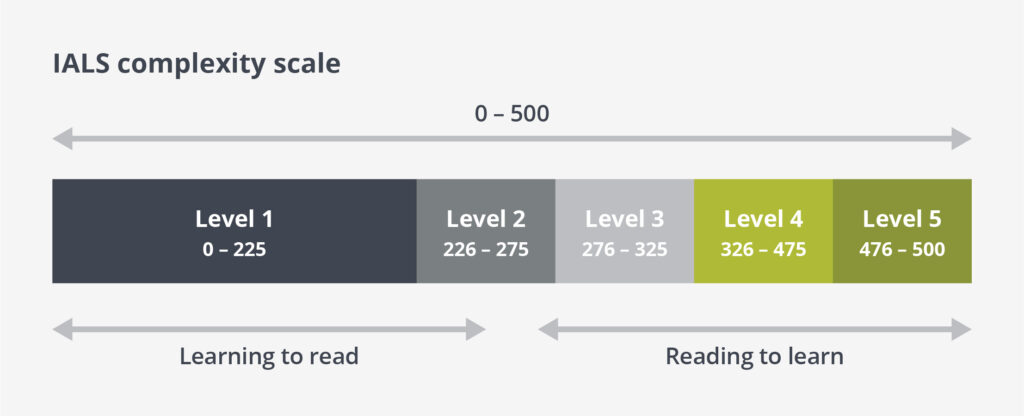
Complexity levels are tied to the Essential Skills framework and support skills development and assessment, career development, and curriculum design. A new complexity framework for the Skills for Success model is in development, but the existing concepts are still applicable.

Complex tasks require more advanced applications of skills compared to simple tasks. Every skill has a range of complexity levels from level 1 (most basic) up to level 5 (most advanced) that indicate the type of applications expected at each level, for each skill. Individuals with level 1 to 2 skills can complete basic tasks but may still be learning to read, while those at level 3 or higher can take on complex tasks and read to learn. Most jobs in Canada require employees to complete complex tasks that use a combination of skills at varying degrees of complexity.

For example, a hotel clerk will frequently need to apply strong oral communication and digital technology skills, whereas a carpenter will encounter more tasks that require numeracy. Complexity levels can be used to determine strengths, challenges, skill levels required for specific occupations, and to find jobs that are a good match for an individual’s skills.

Visit the Government of Canada’s Job Bank to search over 350 careers by their skills profile.
Subscribe to our mailing list to stay up to date on our programs, courses, and training materials.